The Necklace and the Pea

Based in London while spanning the world, Where the Leaves Fall is a magazine that considers local and global experiences and knowledge as a pathway to healing our relationship with nature, with culture, with community, and with the Earth. It explores humankind’s connection with nature through the intersection between social justice and the environment, art, science, culture, philosophy, and food.

Its fourteenth issue spotlights landscape, kinship, and connection, and I am delighted to have contributed a text about eating and ecology titled “The Necklace and the Pea.”

Learn more about the issue here and read the article here, which is accompanied by a gorgeous illustration by Sinae Park.

Food and Body in Colonial Contexts

Next week I am most looking forward to participating in the workshop “Food and Body in Colonial Contexts in Pre-Modern Times.”

Hosted by the Graduate School for East and Southeast European Studies at the University of Regensburg, it will bring together scholars of colonialism and food focused on different regions of the world. Furthermore, it aims to enable exchange and development of methodologies and concepts of dietary cultural encounters in colonial settings and to broaden the scope of existing research to incorporate less studied regions.

I will present the paper “‘Baked Alaska’: Culinary Borders and Muktuk in the North American Arctic,” which considers what I call the politics of delicacies and the history of whale meat as a colonial encounter.

More information and the workshop program are available here.

Off the Menu at the University of Augsburg

It is an honour—and then some—to share the good news: I have received funding from the Elite Network of Bavaria to establish a junior research group at the University of Augsburg.

Off the Menu: Appetites, Culture, and Environment will bring together food studies and the environmental humanities to introduce what I call the “culinary environmental humanities.” In partnership with Augsburg’s international doctoral program, Um(Welt)Denken, our goal is to spotlight culturally shaped eating practices as key sites of environmental transformation and, thus, rethink the environment through a culinary lens.

My deepest gratitude goes to the University of Augsburg, its IDK, my mentors, and to the Elite Network of Bavaria. Danke, danke, danke! Read the press release here (in German).

I cannot wait to get Off the Menu up and running in May 2023. Also, I will be hiring two doctoral researchers and look forward to sharing more details later this year.

Let Them Eat Cake Mix

The fog falls like lace. It obscures any chance of a clear line that separates land from water, water from sky. A woman wades through the mud with a bucket and thick rubber gloves. She walks toward a crowd knee-deep in the water net fishing for salmon. This image sets the scene of journalist and food writer Julia O’Malley’s The Whale and the Cupcake: Stories of Subsistence, Longing, and Community in Alaska.

It also accompanies the book’s introduction: “What Why How We Eat.” No question mark, no punctuation. It does, however, reveal the picture’s GPS: “There is most likely no more democratic fishing spot in America than Kenai, Alaska,” claims O’Malley. An estimated ninety thousand people across the state annually share four hundred thousand sockeye, the majority of which come from the Kenai.

I had the pleasure of reviewing The Whale and the Cupcake for H-Net. Read the rest of the review here.

Life, Death, and Dinner Among the Molluscs

A buffet of vegetables and nuts on the cover of the Routledge Handbook of Sustainable Diets

Food systems need to shift, but how? How might we shape them to nourish humans, animals, and the planet? Edited by Kathleen Kevany and Paolo Prosperi, Routledge Handbook of Sustainable Diets takes these questions to task and gathers 55 chapters that illuminate solutions on environment, health, and well-being, education and public engagement, political processes, and creative approaches to social policies and purposeful design of food environments.

I’m pleased to have had the chance to spotlight shellfish in my chapter “Life, Death, and Dinner Among the Molluscs: Human Appetites and Sustainable Aquaculture.”

This is an absolute meal of a book, which the price unfortunately reflects. And so I would encourage you to ask your local library to order the e-book or pre-order the hardback so that is is available to many. Find out more here.

Venice and the Anthropocene: An Ecocritical Guide

What does Venice look like when observed from the perspective of climate change, environmental collapse, and human-animal relations in an age of industrialization and mass extinction? That is, as a privileged observatory of the Anthropocene?

Published by wetlands and edited by Cristina Baldacci, Shaul Bassi, Lucio De Capitani, and Pietro Omodeo, this guidebook is intended as a tool for learning about the city in a new way. Venice emerges here as a unique ecosystem at risk, but also as a key to understanding our increasingly vulnerable world.

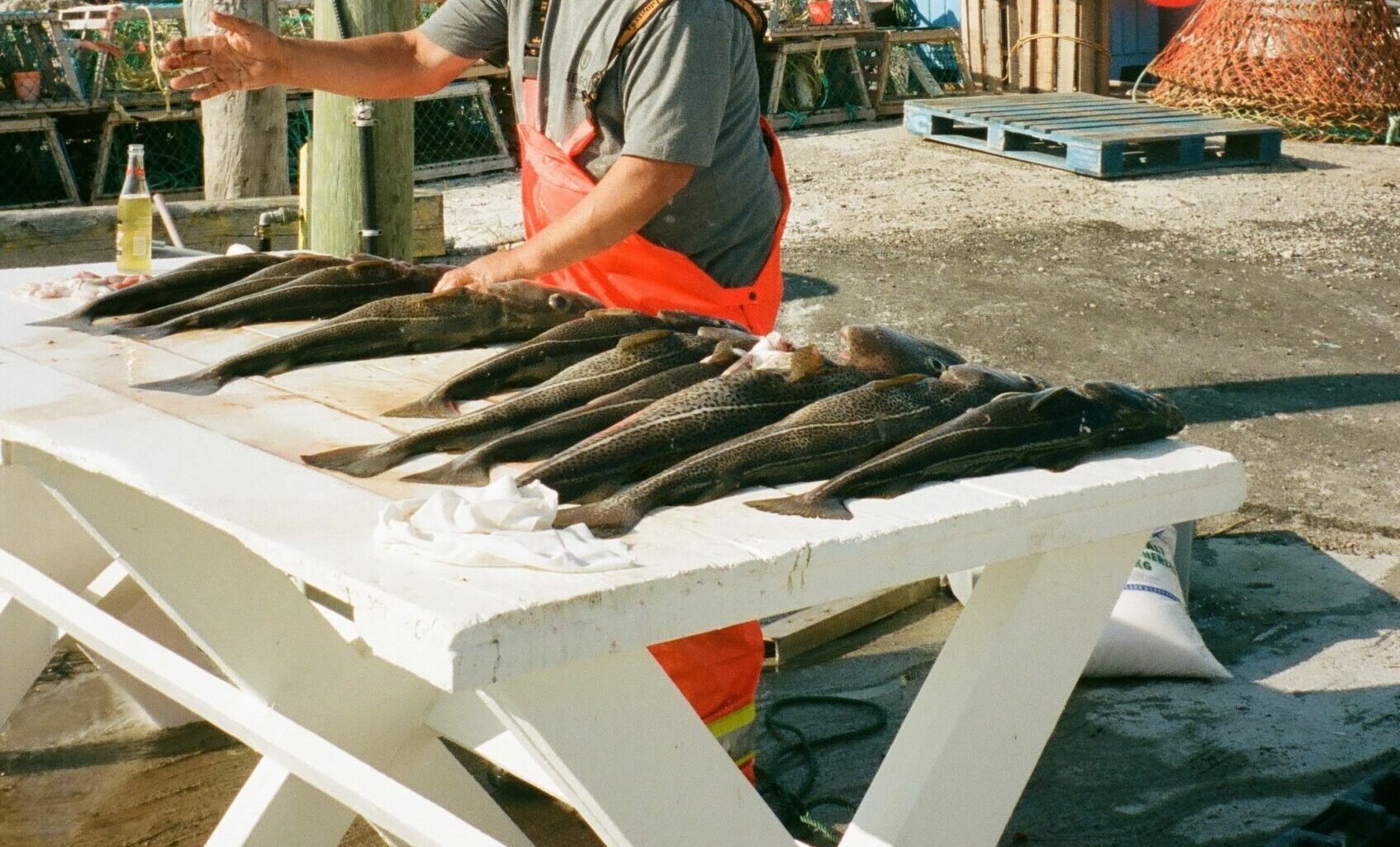
What stories of extinction lie behind local delicacies like baccalà mantecato? It was a pleasure to pose this question in the chapter “Baccalà in Venice, Cod in the World.”

The book is available, as of today, in both English and Italian editions.

"Sad Ol Mush": Childhood in the Past

The purple cover of the academic journal 'Childhood in the Past'

How does breakfast connect to larger conflicts over land and power? And what role does children’s culture play in this?

After having organized the conference Food and/in Children’s Culture: National, International and Transnational Perspectives, literary scholars Anna Gasperini and Laura Tossi have kept the conversation going by curating a special issue of Childhood in the Past. It is a pleasure to have been a part of this project and to have contributed the article “‘Sad Ol Mush’: The Poetics and Politics of Porridge in Residential Schools in Canada.”

My article has just been published. Browse and read the rest of the special issue “Childhood and Food: Literary-Historical Perspectives (c. 19-20th centuries) here.

The Politics of Food

Delfina Foundation in London, England. A brick building with white window frames and lime green shutters.

Based in London, Delfina Foundation introduced its thematic programme The Politics of Food in 2014. Since then it has hosted four seasons, which have focused on themes such as sex, diet, and disaster; adapting; and markets and movement.

Autumn 2022 marks the programme’s fifth season and it turns its attention to the climate emergency. I most excited to be participating as one of its residents. During my month in London, I will be exploring culinary substitutions, their practices, discourses, and politics. Read more about my upcoming residency and the excellent company I look forward to collaborating with.