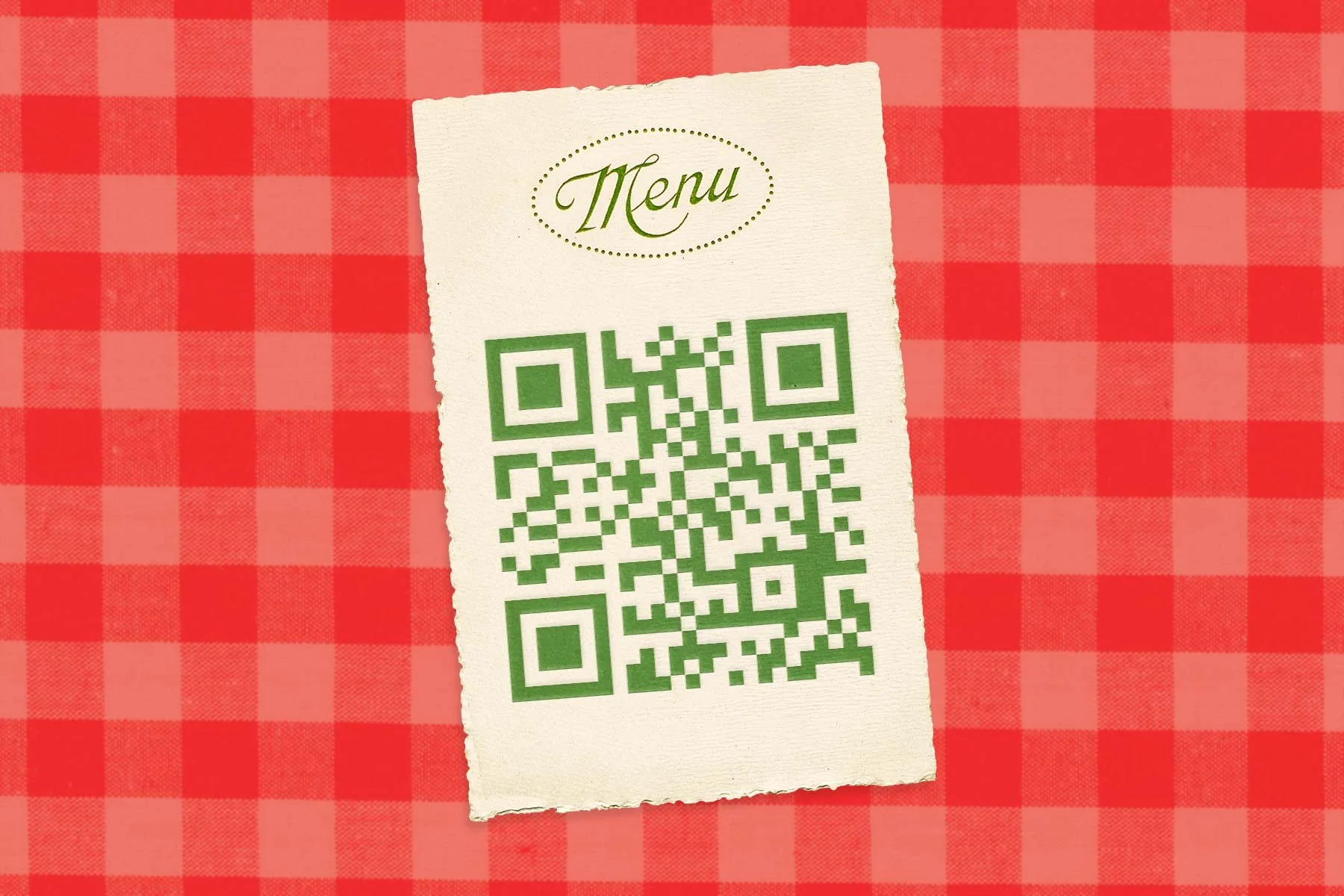
A well-written menu, argues writer Anne Thériault, “can feel like a piece of literature in and of itself.” And part of the pleasure, she asserts, is the menu’s physicality—the weight of its paper and the texture of its grains, of requiring your eyes to scan rather than for your fingers to scroll. Another pleasure was chatting with her about menus as historical archives that remember and preserve dishes and meals from appetites past. Read her shrewd article “Please Don’t Make Me Use Another QR Code Restaurant Menu” in The Walrus.
To Steal a Fish

There is nothing I fancy more than returning to my favourite city in the world, and so to return next week for “Stories Come to Matter: Water, Food, and Other Entanglements” only doubles that delight.
Hosted by NICHE, the conference aims to enrich the discussion around the intricate interrelations between discourse and matter. Its goal is to highlight the values of stories and imagination and, in doing so, outline the vast network of agencies that dominate our material world. More specifically, it considers water and food as critical examples of how matters intertwine with meaning.
My presentation departs from Deborah Levy’s 2016 novel, Hot Milk, where the sun is always blazing. Sofia escorts her mother to Spain in search of a cure for paralysis. But the clinic also diagnoses Sofia's lack of courage and instructs her to steal a fish. At Almería’s market Sofia pokes the mouth of a monkfish and considers sardines and tuna before she slides a dorado into her basket. To steal a fish is the doctor’s prescription for acquiring boldness. Here she steals from the market, but what role does the sea itself—the water—play in this theft? What else might it mean to steal a fish and what worlds do fish story? In dialogue with my research about the intersections between cod and colonization, climate and crisis, "To Steal a Fish: Cod Tales and Colonial Knots" weaves together material, textual, and geographical fragments to tell global cod tales.
A Window, A Mountain, A Scape

This fall I had the pleasure of joining the Editorial Collective of Canadian Food Studies / La Revue canadienne des études sur l’alimentation. Published open-access, the journal champions articles that are as diverse and entangled as the subject of food itself, providing critical perspectives on the ways in which humans, vittles, and environments construct one another.
And it was another pleasure still to have penned the opening words for the journal’s latest issue: “A Window, A Mountain, A Scape.” Read my editorial here and the whole issue here.

© Photo: n.b.k. / Victoria Tomaschko
Old Salt and Fresh Fish
Initiated last semester by the Environmental Science Centre and open to the public, the Green Hour spotlights current research in the environmental humanities by invited guests alongside scholars from the University of Augsburg. I am most look forward to opening this semester’s series of discussions next Thursday with my talk Old Salt and Fresh Fish: Introducing the Culinary Environmental Humanities.
Whether a main, a side, or even a snack, a dish narrates how appetites and environments entangle and clash. Considering how history seasons contemporary foodways, this talk introduces the “Off the Menu: Appetites, Culture, and Environment” research group at the University of Augsburg and its aim in advancing the “culinary environmental humanities.” Departing from the intersections between cod and colonization, climate and crisis, Old Salt and Fresh Fish will weave together slippery stories about the intimate relationship between eating and ecology to ask: How does a recipe trace the contours of local environments and, in contrast, how do culinary cultures draw beyond these borders?
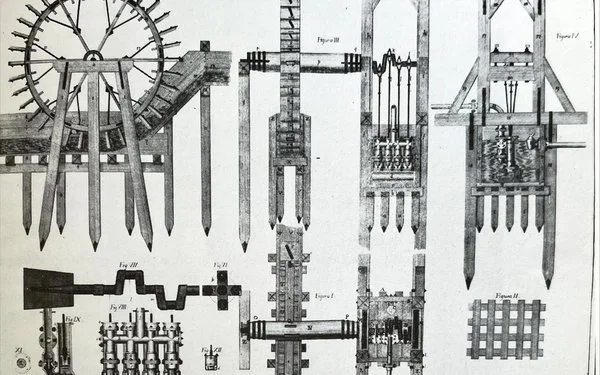
Kupferstich von C. Walter/Nessenthaler zu Grund- und Aufrissen eines Kurbelpumpwerks („Kurben-Druckwerck“), StadtAA. StadtAA
Streams and Floods, Ripples and Flows
Next week the Institute of European Cultural History at the University of Augsburg is hosting the workshop Water Cultures and it is an honour that I will open the program with my lecture “Streams and Floods, Ripples and Flows: Towards a Bluer Humanities.”
What colour are the humanities? Or, perhaps, it is better to rephrase this question to highlight the possibilities of the plural rather than the rule of the singular. So, to try again, what colours are the humanities? The emergence of “the blue humanities” suggests that colour matters. John R. Gillis, for instance, argued that history has largely been a landlocked field. Scholars have traditionally started and ended their narratives on land, rendering the water and ice and slush and wetlands in between a “blue hole.” But blue only captures certain imaginations of water. What happens if you replace colour with wetness? How slippery are the humanities? How damp and how humid? In dialogue with these questions, “Streams and Floods, Ripples and Flows: Towards a Blue Humanities” will both think with and beyond colour to survey the emergence of the academic and creative discourse over the past two decades that places water and wetness—and their many forms—at the centre of its attention.
The question of water-related knowledge, attributions, communications and patterns of interpretation is at the centre of a cooperation between the universities of Amiens and Augsburg, with the participation of academics from Bayreuth and Abomey. The workshop in Augsburg is a continuation of a scholarly exchange that began in Amiens in May 2023. Find out more about the workshop and the rest of the program here.
Extinction, Endangerment, and Environmental Storytelling
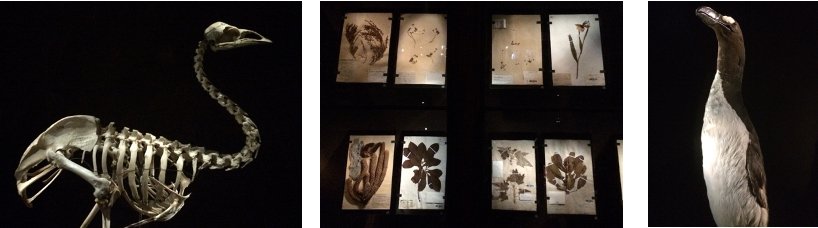
What kind of narratives are mobilized when recounting, remembering, and highlighting extinction and the endangerment of nonhumans? Hosted by the Stavanger Art Museum and organized by the project “Beyond Dodos and Dinosaurs: Displaying Extinction and Recovery in Museums” in cooperation with the Greenhouse Center for Environmental Humanities at the University of Stavanger, this week I am looking forward to participating in the “Extinction, Endangerment, and Environmental Storytelling” Workshop.
Titled “Turtle Soup: The Ghost of Appetites Past,” my paper provides soup for thought by asking: How do appetites both cause and chart environmental loss? And what role do cuisines play in sharing stories about plants, animals, and the environment at large? Browse the rest of the program here.

Fish, Recipes, and Culinary Geography
How might a recipe double as a map? Beyond its list of ingredients and instructions, how does a recipe connect plants and animals and chart the lands and waters of the cuisine that it represents? In answer to this question, I am delighted to be giving a lecture next week as part of this year’s Towards an Atlas summer school at Università Iuav di Venezia in partnership with the NO-CITY network.
Titled “‘Making Fish’: Recipes and the Construction of Culinary Geography,” my talk will discuss how recipes and menus—their histories and literary lives—construct, represent, and even resist the specificities of place. How does a recipe follow ecological flows and, in contrast, how do culinary cultures draw well beyond the borders of their local maps? By sharing slippery stories about fish, it will weave together scholarship about tradition, authenticity, and cultural constructions of local food together with reflections on recipes, authorship, and the “culinary commons.”
Follow the students and their thinking and eating and living with across the Venetian lagoon here.

Best Before: Time and Other Ingredients
I am almost always late. Living a good chunk of my adult life in Germany—a country associated with punctuality—has not changed this. And yet there is one exception: I am always on time, if not early, for ballet class. Ballet, you see, sets a strict rhythm of exercises. Pliés open the class. The choreography might change week to week and yet the sequences of bends and stretches and jumps never does. Pliés gently welcome you to the barre and if my body misses them, then I might as well miss the whole class. So although I’m probably more comfortable than I should be challenging the collaboration between a clock’s hands and the social expectations they set, I do not dare disobey ballet’s schedule.
All of this is to say that I have been thinking about time: about how the body feels it and how the mind respects—or refuses—its measurements. And so it is with great excitement that I am returning to Oslo next week to take part in the “Lifetimes Conference.” The final event of the Lifetimes Research Project at the University of Oslo will bring together scholars who approach time as an analytical lens through which to study objects, events, and practices, entanglements, materiality, and futurity.
I’m excited to be part of the “Life cycles and death cycles” panel on Friday 11 August, where I will present the paper “Best Before: Time and Other Ingredients.” And I am most looking forward to being in the company of Ana Maria Delgado, who will speak about fermentation and the temporalities of microbial-based living material, alongside Camelia Dewan, Elisabeth Schober, and Johanna Markkula, who will address the life cycles of ships as both theory and method. Browse the whole program here.
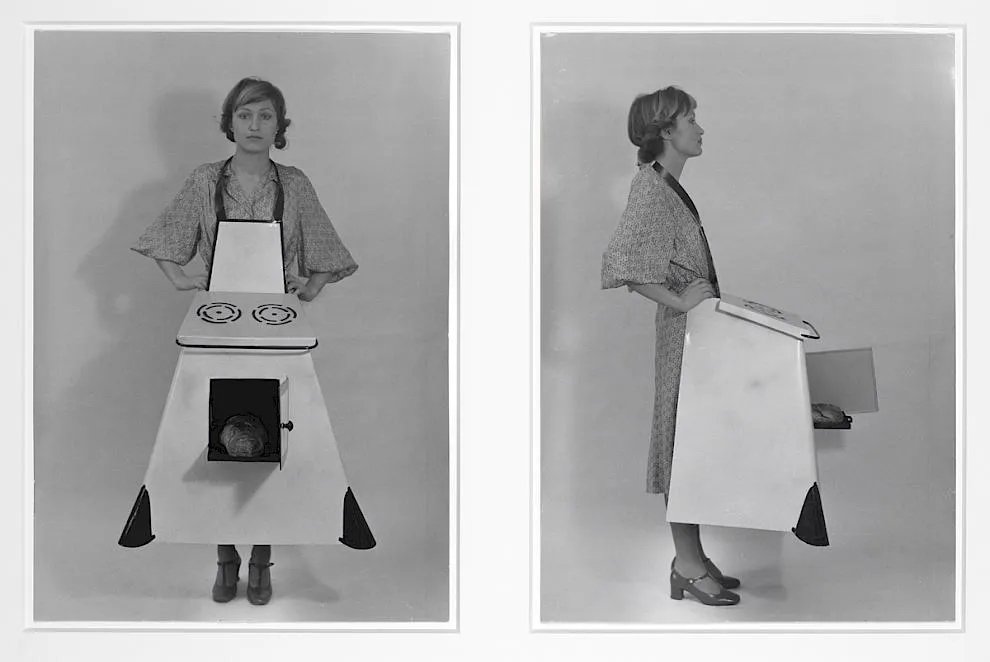
Birgit Jürgenssen, Hausfrauen-Küchenschürze, 1975, Estate Birgit Jürgenssen, Galerie Hubert Winter, Vienna, Austria.
No Strings Attached
As a cultural historian who studies food, you could say that cooking is part of my job. And yet I almost never don an apron. Why not? I have followed the apron’s cultural history to consider a couple of potential answers. More than just fabric, the apron—a seemingly inconspicuous garment—tells textile tales of labour, gender, and class. Tales I have written about for KWI Essen’s blog.
The KWI is an institution that researches, arguments, and reflects; it represents specific issues and ideas, and possibly even an intellectual style. And its blog is meant to increase its visibility and invite debates about its work. Read my contribution “No Strings Attached” here.

Anca Benera & Arnold Estefán, Perpetual Harvest, 2023, installation, 6 objects (woven wheat straw), 90 x 15 x 15 cm each, Photo courtesy of the artists.
What to Eat in Times of Perpetual Crisis
Employing a range of media, including installation, performance, and video, the research-oriented practice of Anca Benera and Arnold Estefán addresses historical, social, and geopolitical narratives and their underlying power structures. Their recent work has focused on ecological issues and the overexploitation of natural resources as well as the overlaps between environmental concerns and military affairs. Fleshing out these themes, their first solo exhibition in Germany—Rehearsals for Peace—is now on view at the Neue Berliner Kunstverein.
In dialogue with their exhibition, I am delighted to host a workshop together with the artists on Thursday 29 June, titled “What to Eat in Times of Perpetual Crisis.” From British and US “victory gardens,” designed to protect against food shortages, to food rations in crisis areas to combat food insecurity: war and hunger are deeply entangled. In Europe, the term “wartime recipe” usually summons a bygone era and yet, with Russia’s ongoing invasion of Ukraine, it takes on new relevance today. How do crises such as war and extreme weather conditions determine what we eat? How do militarized landscapes and industrialized foods interrelate and overlap? And how does food link to violence—both fast and slow?
This workshop takes the form of a picnic and offers canned and collected foods in tandem with stories about landscapes and agricultural rituals, time and preservation, nature and war. Find out more and register here.

Eating Ecologies at the Oslo School of Environmental Humanities
It is an absolute delight to share that I will be spending the next two weeks as a visiting researcher at the Oslo School of Environmental Humanities. I am most grateful for this opportunity to get to know and join this dynamic community of scholars and students.
As part of my stay, I will be giving a workshop as part of OSEH’s Miljøsalon. One part talk and one part picnic, which is to say that it will begin with thought and end with food, it will take place on Wednesday 31 May. I will present an overview of how my practice merges creative food studies methods with academic research and share a couple of snacks that narrate stories of extinction, ships, and time. Sign up to take part here and read more about my research stay at OSEH here.
Thinking with Urban Natures

For three years, the Urban Environments Initiative brought together researchers from across disciplines to share, question, and reflect on urban environmental issues. The latest issue of Global Environment: A Journal of Transdisciplinary History, published by the White Horse Press, showcases some of knots and tangles of these reflections and the energy that only interdisciplinary thinking can produce.
This special issue, titled “Irritations and Unforeseen Consequences of the Urban: Debating Natures, Politics and Timescapes,” was edited by Eveline Dürr, Regine Keller, and Daniel Dumas.
Together with Raúl Acosta, Matthew Gandy, Maan Barua, Joseph Adeniran Adedeji, and Kara Schlichting, I ran toward the question of whether or not there is an urban nature and, in response, asked: What’s blue got to do with it? It has been a privilege to think and write in the company of such inspiring minds. Browse the collection of articles here.
Eating with the Trouble
As part of The Sustainable Development Festival in Rome, this Wednesday I am honoured to be participating in the “Food, Energy, Water, Migration Nexus and SDGS” round table alongside climate scientist Carlo Barbante, sustainability scientist Vienna Eleuteri, and climate change project expert Nawid Soofizada. I will present “Eating with the Trouble: Cuisine, Culture, and Climate, and the Future of Food.”
The round table will take place online. Find out more about the festival here and reserve a spot for the webinar here.
The Necklace and the Pea

Based in London while spanning the world, Where the Leaves Fall is a magazine that considers local and global experiences and knowledge as a pathway to healing our relationship with nature, with culture, with community, and with the Earth. It explores humankind’s connection with nature through the intersection between social justice and the environment, art, science, culture, philosophy, and food.
Its fourteenth issue spotlights landscape, kinship, and connection, and I am delighted to have contributed a text about eating and ecology titled “The Necklace and the Pea.”
Learn more about the issue here and read the article here, which is accompanied by a gorgeous illustration by Sinae Park.

Convivial Tables
The table, in many ways, is not only a stage but also a map. Critically considering the connections between eating and ecology, TBA21’s Ocean Space has been hosting a series in Venice titled Convivial Tables that brings together artists and scientists, chefs and activists to reflect on the intimate relationship the table has with environments both near and afar.
The publication Entrée: The Pannier of the Venice Lagoon further expands on the conversations that the Ocean Space table has hosted thus far, and I am chuffed to have contributed the text “Let Them Eat (Blue) Crab” which reflects on so-called invasive species. Read the publication here.
Food and Body in Colonial Contexts

Next week I am most looking forward to participating in the workshop “Food and Body in Colonial Contexts in Pre-Modern Times.”
Hosted by the Graduate School for East and Southeast European Studies at the University of Regensburg, it will bring together scholars of colonialism and food focused on different regions of the world. Furthermore, it aims to enable exchange and development of methodologies and concepts of dietary cultural encounters in colonial settings and to broaden the scope of existing research to incorporate less studied regions.
I will present the paper “‘Baked Alaska’: Culinary Borders and Muktuk in the North American Arctic,” which considers what I call the politics of delicacies and the history of whale meat as a colonial encounter.
More information and the workshop program are available here.

Planetary Habitability
How do different social and political assumptions behind any understanding of planetary boundaries affect the possibilities for understanding each other, the measurability of the planet at multiple scales, and the possibility of agreeing on and implementing effective countermeasures?
Last October I had the pleasure of participating in Where is the Planetary? at Haus der Kulturen der Welt. In an experimental setting designed by artist Koki Tanaka, scientists, scholars, and artists shared perspectives on planetary practice: from zooming out to the cosmic, grounding back to our geological Earth and personal biographies, to exploring the ethics of repair and care and the vision of a second primordial soup for planetary survival.
The rich weekend of discussions lives on in a series of videos by Koki Tanaka, which are available to watch here and begin with Day 1.
On Day 2 our group tackled questions of planetary habitability through culinary cooperation, which you can watch here. The simple question of to what extent different recipes may or may not successfully combine into one opened up space to discuss a seemingly unsolvable problem: How can we foster effective planetary collaboration despite differences, antagonisms and unequal historical responsibilities?

Cooking in Circles
Next Friday I am delighted to be participating in the International Symposium: Circularity at Seoul National University’s Institute for Culture and Arts. The symposium’s second track considers “Socio-Ecosystems of the Future” and will be introduced by Jihoi Lee (curator at the National Museum of Modern and Contemporary Art) and moderated by Professor Hong-jung Kim (SNU).
In the inspiring company of Soik Jung (co-artistic director of the Korean Pavilion at the Venice Architecture Biennial 2023) and In-ah Shin (co-organizer of Feminist Designer Social Club), my talk will consider the symposium’s theme through a culinary lens.
How do we relate to the environment through the foods we eat and the stories we season them with? In Cooking in Circles I will survey the relationship between eating and ecology. My lecture collects examples of cooking as a collaborative cultural practice that reveals connections and proposes alternatives for being in relation with the flora and fauna different culinary traditions call food. Taken together, this collection narrates how materials, flavours, and ideas circulate from one context to another, how they mingle, merge, and melt into each other, and how cuisines relate to climate, how appetites shape futures.
Find out more about the program and the other tracks, and register here. The event will also be live streamed.
Off the Menu at the University of Augsburg

It is an honour—and then some—to share the good news: I have received funding from the Elite Network of Bavaria to establish a junior research group at the University of Augsburg.
Off the Menu: Appetites, Culture, and Environment will bring together food studies and the environmental humanities to introduce what I call the “culinary environmental humanities.” In partnership with Augsburg’s international doctoral program, Um(Welt)Denken, our goal is to spotlight culturally shaped eating practices as key sites of environmental transformation and, thus, rethink the environment through a culinary lens.
My deepest gratitude goes to the University of Augsburg, its IDK, my mentors, and to the Elite Network of Bavaria. Danke, danke, danke! Read the press release here (in German).
I cannot wait to get Off the Menu up and running in May 2023. Also, I will be hiring two doctoral researchers and look forward to sharing more details later this year.

Appetites and Other Ghosts
In a 1996 article in The New Yorker, Susan Orlean chronicles what she calls “the homesick restaurant.” It isn’t her homesickness she refers to. In contrast to those frequenting a restaurant in Miami’s Little Havana—one that remembers the one they left behind—she confesses, “There has never been anything in my life that I couldn't go back to if I really wanted to.” The restaurant she writes about serves those who are homesick for a different place, a different time. But what if we add up those different places and times so that they equal environments, so that the sum they make is the planet?
I am looking forward to tackling this question next week at KWI, where I will present my research as part of its Wednesday Colloquium. My talk will consider extinction through a culinary lens. Zooming in on substitutions—their practices, discourses, and politics—I ask: How do cuisines chart, mourn, and perhaps even aim to counter environmental loss? Appetites and Other Ghosts will survey my current work on the relationships between restaurants and politics, food and migration, and cuisine and planetary health.
The Colloquium is hybrid, which means that all are welcome to join online. Find out more and register here.