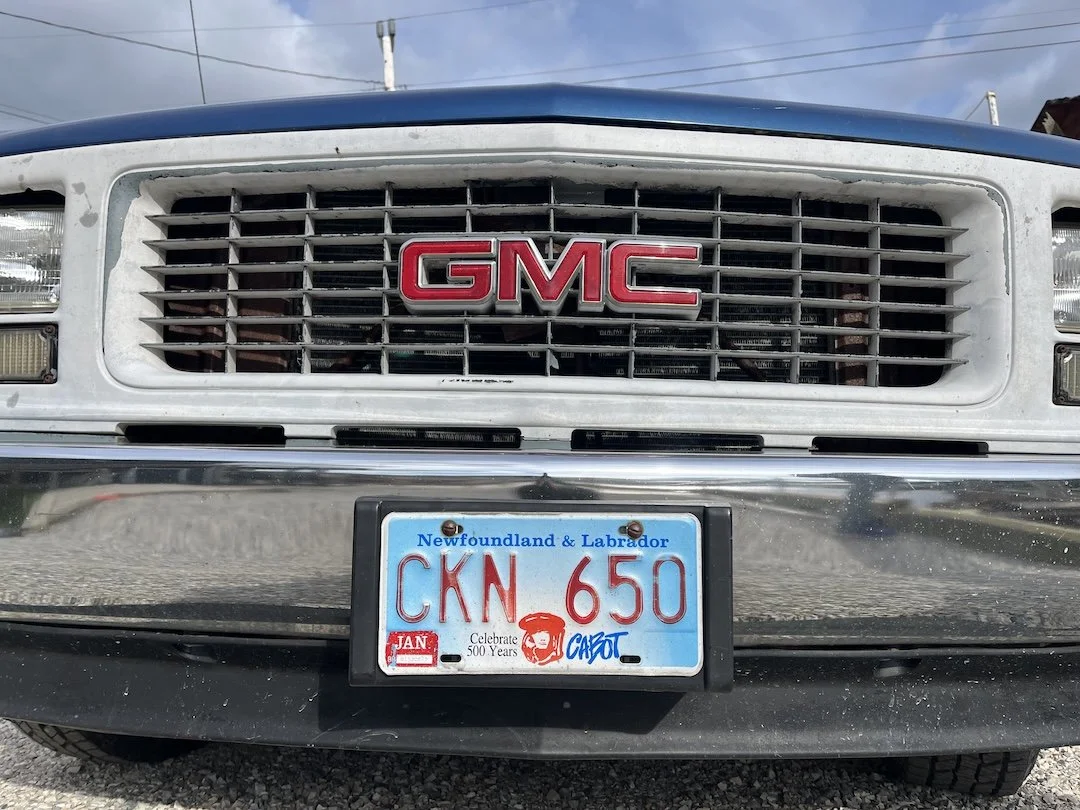
On the last (and spookiest) day of October, I look forward to sharing my research with my colleagues at the University of Augsburg. Titled Cod, Cabot, and the History of Salt, I will present my work about global codscapes and about foodways found and lost at the fifth meeting of The Network of Environmental History.
Recipes and Ingredients and RELISH

What is a recipe and what exactly is it that one does? Sure, a recipe can give you directions to dinner, but what other worlds does it story and perhaps even build?
Organized within the framework of RELISH (Reframing European Gastronomy Legacy through Innovation, Sustainability and Heritage), a European Union Horizon project, next week I’m excited to return to the University of Gastronomic Sciences in Pollenzo, Italy, for the workshop “Recipes and Gastronomy as Cultural Heritage: Meaning, Methodology, and Media.” My paper—Tongues and their Mothers, Ingredients and their Understudies—considers the politics of names and substitutions by asking: When does a recipe stop being one dish and, instead, turns into another?
Plates and Other Collisions
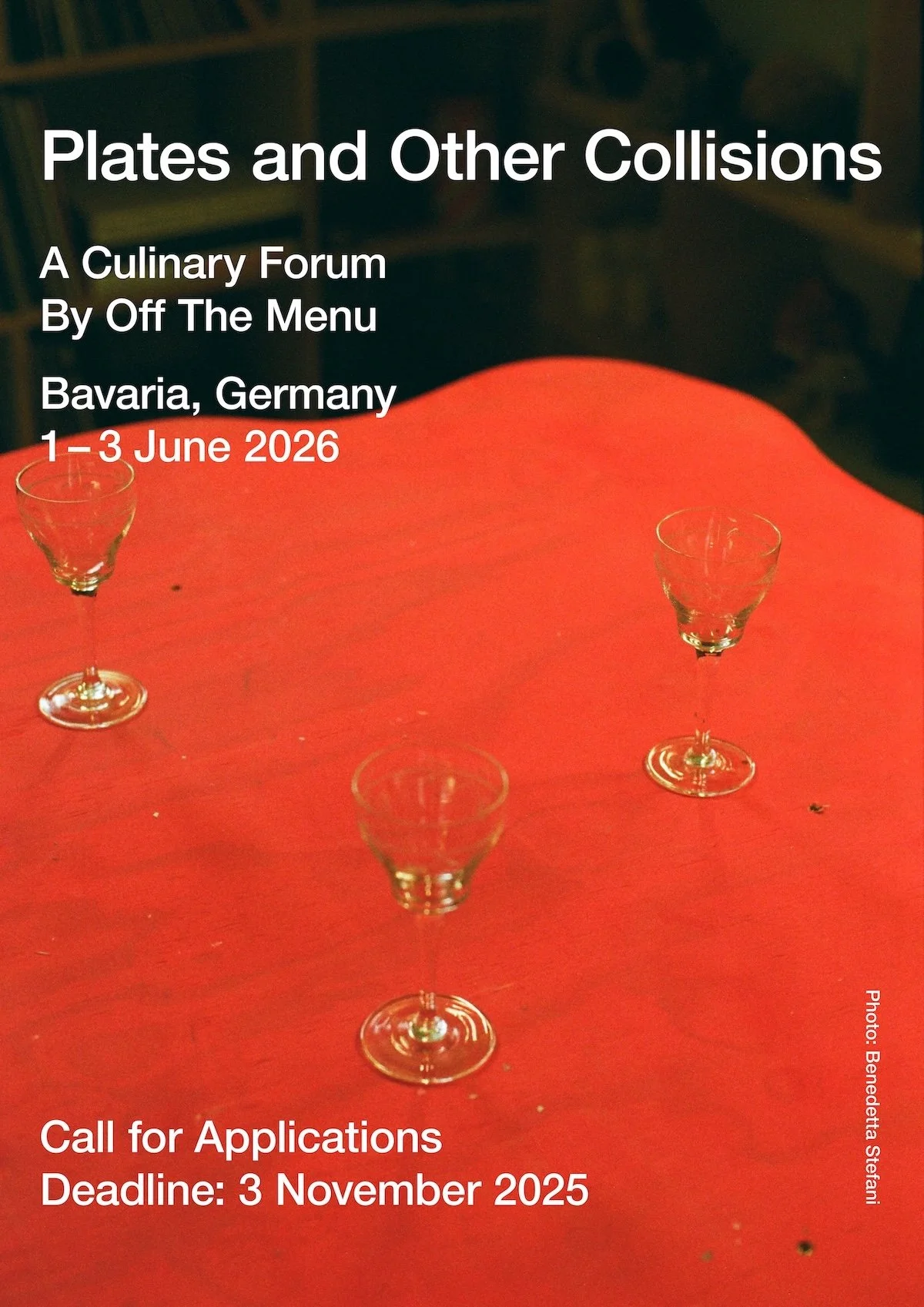
The Off the Menu: Appetites, Culture, and Environment research group, which I lead at the University of Augsburg, is excited to share that we are currently accepting applications from researchers and practitioners interested in all the ways that eating and ecology intersect to join us for a culinary environmental humanities forum in Bavaria in June 2026.
Find the call and more details on our website.
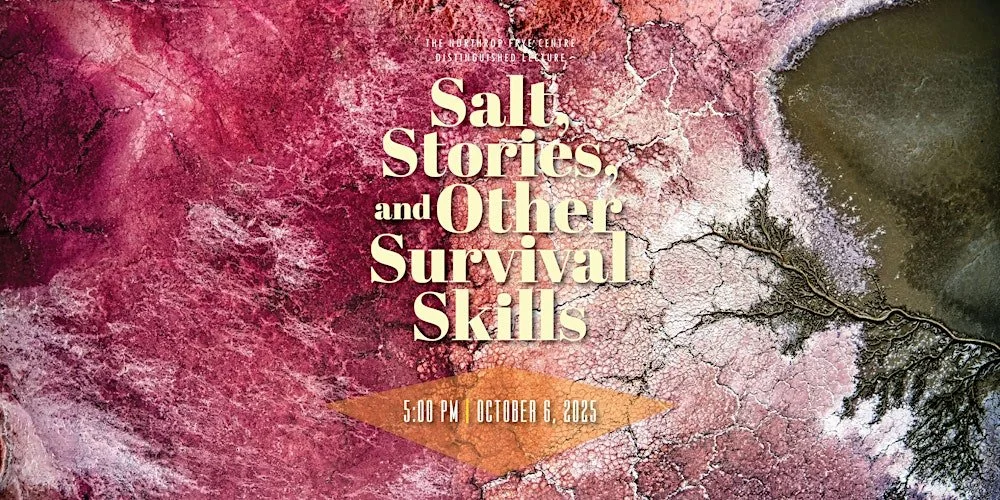
The Northrop Frye Centre Distinguished Lecture
It is an immense privilege to share that I have been invited to deliver this year’s Northrop Frye Centre Distinguished Lecture at the University of Toronto.
The story is the spice, it’s the seasoning, the salt, says one chef. It is stories that flavour food—something to think about every time a recipe instructs you to “salt to taste.” But salt does not season food alone. Salt spikes the water. It lines the rocks. It thickens the air. Salt behaves and misbehaves in terms of where it shows up, and how much of it. Just as climate change is largely a story about water—too much in some places, too little elsewhere, and temperatures that are too high—salt traces environments past, present, and future. Braiding together salt, stories, and other survival skills, I will present a lecture about preservation, time, and environmental futures.
If you’re in the city, one that I am lucky enough to call my hometown, please join on 6 October for Salt, Stories, and Other Survival Skills, at Victoria College at 5pm, followed by a reception.

The Built Ocean
Architecture, as a practice and as a discipline, needs solid ground and yet shorelines ebb and flow, refusing to commit to a single line that separates water from land. This introduces the idea of an architecture of the sea, a theme that’s the lodestar of “The Built Ocean” conference, hosted by the Faculty of Architecture at the University of Porto from September 10 to 13, and that I’m most excited to be presenting at in the company of so many fellow watery researchers.
Thinking about what I call codscapes, my contribution to the Animals panel is set on Fogo Island and begins with my first night in saltbox house, which taught me that here and in other Newfoundland outports buildings, like shorelines, don’t stay still. In response my paper, Split, Salted, and Staged, will spotlight the Newfoundland fishing stage as an example of liminal and amphibious heritage that is equal parts material, cultural, and environmental.
'Culinary Claims' nominated for a Gourmand Award

The Gourmand World Cookbook Awards, founded by Edouard Cointreu in 1995, fete the year’s best books in food and drink, and I am humbled that Culinary Claims: Indigenous Restaurant Politics in Canada is a 2025 contender in the “Culinary History” category (and is in such inspiring company).
The ceremony, where the winners will be announced and applauded, will take place the last week of November.
Food Art Research Network

A constellation of artists and cultural workers engaged with the aesthetics and politics of food, the Food Art Research Network aims to nurture peer learning, exchanges, and encounters in contemporary art and beyond.
I am chuffed to officially join this inspiring community and look forward to contributing to FAR’s commitment to slow cultural work and its sensitivity to supporting metabolic connections that reimagine our worlds.
A Culinary Conversation about Archives, Climate Histories, and Canned Futures

If to talk about food is to talk about the weather, then to talk about cuisine is also to talk about climate, its histories, futures, and uncertainties. In 1989 the chef Alice Waters claimed, “As restaurateurs, we are now involved in agriculture and its vagaries. This isn’t a matter of idealism but rather of self interest and survival.” This introduces how human appetites are architects shaping environments of worlds past and worlds present. And yet, why does environmental history prioritise production over consumption?
In response, I’m excited to be in Uppsala next week for the European Society for Environmental History’s 2025 Conference: Climate Histories. Together with Penelope Volinia and Philine Schiller, I will be “cooking the books” to stage a culinary conversation about archives, climate histories, and canned futures.
Talking Top Chef on Dish Dish
Carolyn Mason and Ariana Gunderson are two food anthropologists and the hosts behind Dish Dish—a podcast for smart people who like food TV.
Last week I had the delight of (and a blast) chatting with them about my book, Culinary Claims, Top Chef Season 22, and representations, imaginations, and stereotypes of foodways in Canada.
Listen to the episode here, or wherever you get your podcasts.

The Environment & Society Portal publishes an excerpt of 'Culinary Claims'
The Rachel Carson Center runs the Environment & Society Portal, which serves as a gateway to open access resources on human-environment relationships. It spans the center’s own publication series alongside virtual exhibitions and a multimedia library, and I’m thrilled that an excerpt from Culinary Claims: Indigenous Restaurants Politics in Canada has now joined its collection. Read the book’s introduction here.
Muktuk and Culinary Borders
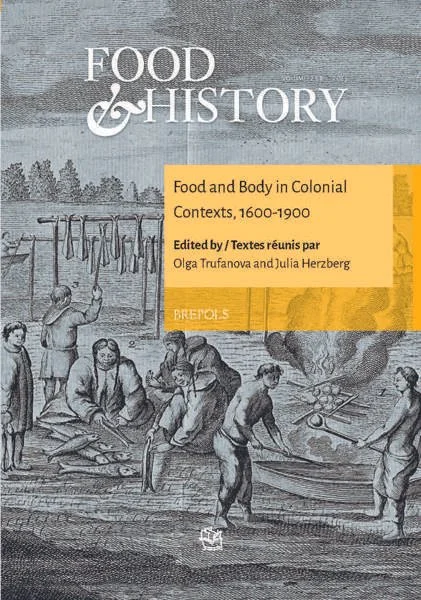
In their work as editors, Olga Trufanova and Julia Herzberg have assembled a collection of essays that expands the geographical focus of studies of food and colonialism. Gathered in a special issue of Food & History dedicated to “Food and Body in Colonial Contexts, 1600–1900,” I’m humbled to have contributed the article “Muktuk and Culinary Borders in the North American Arctic since 1867.”
Often accompanied by the word “delicacy”, muktuk—whale skin and its blubber—is a culinary staple in the Arctic, as well as a polarizing food that colonists and settlers have largely rejected. It, therefore, introduces themes pertinent to the history of dietary cultural encounters in northern colonial settings—from the politics of “delicacies” to how foods make and unmake borders. My article follows muktuk’s textual traces to analyse how they represent culinary relationships between peoples, cultures and northern lands. Focusing on the period post-1867, it asks: what is a culinary border and how does the word “delicacy” materialize, manage, and maintain cultural distance?
'Culinary Claims' on the New Books Network

Last week I not only had the pleasure of chatting with Dr. Miranda Melcher about my book Culinary Claims, Indigenous Restaurant Politics in Canada, but I also had heaps of fun.
A prolific and curious reader, Miranda is the host of New Books with Miranda Melcher, a special series of interviews for the New Books Network.
Our conversation was published yesterday, which you can listen to here.
Fish and Other Thefts

What does it mean to steal a fish? What worlds do fish story? And how do stories come to matter?
Based on a workshop at Ca’ Foscari University of Venice about the intersections between food studies and the blue humanities, it is a delight to have contributed a bold series of notes (also known, I guess, as a chapter) to the book Stories Come to Matter: Water, Food, and Other Entanglements, which was thoughtfully edited by the kind souls that are Santiago Alarcón-Tobón and Enric Bou.
Generously available open-access, download “To Steal a Fish” here and the whole book here.

Hiroshi Sugimoto, Caribbean Sea, Jamaica, 1980
Storying Seascapes, Writing Water
Although I’m someone who tries to paint with all the crayons in the box, years ago I fell in love with Hiroshi Sugimoto’s Seascapes. In his photographic portraits of bodies of water around the world, the artist restricts his palette to black and white and the worlds of grey between the two.
And so I am beatific to have had the opportunity to write what is, one part, a love letter to Sugimoto’s Seascapes and, another part, a polemic against coding water as only blue for Water Cultures, a trilingual exploration of what it’s like to write watery worlds from a slew of disciplines.
Edited by Charlotte Ladevèze, Davide Martino, Eva Rothenberger, and Corinne Fournier Kiss, and published by the University of Fribourg, the book is—hurray!—open access and free to download here. And a thousand thanks to Sugimoto’s Studio for generously gifting my chapter some of his Seascapes.
Writing Appetites and Their Worlds

Next Thursday I’m honoured to participate in the Edible Dialogues series, which is organized by the Graduate Association of Food Studies (GAFS) and aims to promote a collaborative environment that develops inner and cross-disciplinary discussion.
Drawing from the experience of writing my first book, Culinary Claims: Indigenous Restaurant Politics in Canada, in tandem with how my research at large straddles food cultural history and the environmental humanities, I will reflect on how genre and appetites collide in how we write food studies scholarship.
All are welcome to join us online on Thursday 24 April at 5pm CET for “Eating With the Trouble: Writing Appetites and their Worlds.” Register here.

'The Abandoners'
What happens if we see motherhood not as a portrait, but as a landscape?
I am beatific to have written my first non-academic book review, which of course disrespects genres by borrowing from the personal essay—titled “A Literary Dictionary of the Mothers Who Leave”—about Begoña Gómez Urzaiz’s important The Abandoners: Of Mothers and Monsters.
Thank you kindly, Literary Hub, for hosting my most tender of words and for letting me confess my commitment to leopard print as an aspirational aesthetic.
Special Fermentation Issue of 'Food, Culture & Society'

In November Food, Culture & Society published my article “Time and Microbes, Tides and Bodies,” and it is a frisson of delight to see that the whole issue has now been released.
Guest edited by Mark Stern and Mike Gill, this special issue gathers scholars and practitioners (and those brave enough to test the boundaries between the two) to think about and to think with fermentation.
I am honoured to be in such bright and bubbly company, from author Julia Skinner to art collective Rice Brewing Sisters Club and from chef Eleni Michael to Maya Hey, microbe scholar and friend extraordinare, to name just a handful. And to add a cherry on top, artist Darich Pérez Reyes has graciously shared prints from his fermentation linoleum cut series.
Rooted in the plural, fermentation is always a choir and never a solo. A thousand thanks to Mark and Mike for shepherding this collaborative project and for including my voice.
Greenhouse Environmental Humanities Book Talk

Next Monday, 24 March 2025, I’m excited to join the impressive line-up of new titles featured by the University of Stavanger’s Greenhouse Environmental Humanities Book Talk Series.
Launched in March 2020 as an effort to connect to communities near and far in response to COVID, the Book Talk Series has now become a leading resource for the latest in environmental humanities scholarship. Each talk takes place online with a live audience and is, then, recorded and added to the series’ virtual library.
Do join us online at 4pm CET on Monday for a preview of my very first book, Culinary Claims: Indigenous Restaurant Politics in Canada, and a discussion with the singular duo behind the Greenhouse: Prof. Dolly Jørgensen and Prof. Finn Arne Jørgensen.
Find the Zoom link and more details here.

Rock, Fish, and Futures
Where does the north begin and end? Is the Canadian North rooted in land or is it anchored at sea, crashing against the slushy liminality of water and ice? And what role—or sway—do east and west play in pinning down and defining “the North”?
Embracing how many different Norths both collide and coalesce in cultural imaginations of the vast lands and waters that are now called Canada, I’m looking forward to the Annual Conference of the Association for Canadian Studies in German-speaking Countries in Berlin next week, where I will ask: Where is Newfoundland—both the first part of the country to be colonized by Europeans and Canada’s youngest province—located in imaginations of the Canadian North?
'Culinary Claims' available for pre-order

It is extremely difficult for me to write this next sentence without cursing or going unprofessionally hard on the exclamation marks, but I wrote a book (!).
I couldn’t be happier to share that my very first monograph—Culinary Claims: Indigenous Restaurant Politics in Canada—will be published in March 2025 by the Culinaria series at the University of Toronto Press and is now available to pre-order as a paperback, hardcover, and ebook. The publisher’s website also includes a link for recommending it to libraries and for requesting a desk copy.
The handsome cover is dressed up in a detail of the installation Iini Sookumapii: Guess who’s coming to dinner? by Adrian Stimson for the 2019 Toronto Biennial of Art. A thousand thanks for the permission to feature this fine artwork, as well as to everyone who made the acknowledgements my favourite chapter to write!